Why Smart Contract Interaction Requires More Than a Multi-Chain Wallet
The most dangerous transaction in decentralized finance may be the one that looks completely ordinary. A token swap, liquidity deposit, or approval can succeed exactly as written while producing an outcome the user did not intend. This is the central security problem in smart contract interaction: transaction validity is not the same as transaction safety. A multi-chain wallet can connect accounts and networks, but a serious risk-management workflow must also help the user understand what a transaction is likely to change before it is signed.
That distinction matters particularly in the United States, where DeFi users often move between Ethereum, layer-2 networks, and other compatible chains through a single browser session. Each network may have different applications, fee markets, bridges, token standards, and contract risks. The interface can feel unified even when the underlying security assumptions are not. Transaction simulation offers a useful additional layer, but it should be understood as an inspection tool rather than a guarantee.
What a Smart Contract Interaction Actually Does
A smart contract interaction begins with a transaction request. At a basic level, that request identifies a destination contract, includes encoded instructions, specifies a network fee, and may transfer native assets or request changes to token permissions. The wallet presents this request for signing. Once signed and accepted by the network, the transaction becomes part of an execution process governed by the contract’s code and the state of the blockchain at that moment.
The important point is that the visible action is often only a label supplied by an application. “Swap,” “stake,” or “claim” may conceal several contract calls. A swap might involve an approval, a routing contract, and a token exchange. A bridge transaction may lock assets on one chain while creating a message that another system later processes. A malicious site can use familiar language while requesting an unlimited token allowance or attempting to move assets through a deceptive contract.
This creates a useful mental model: the wallet is not merely a key holder; it is a boundary between human intent and machine-readable instructions. Security depends on how well that boundary translates the request. Contract addresses, function parameters, asset movements, permissions, and network identity all matter. A polished application interface does not remove the need to inspect those underlying elements.
Transaction simulation improves this translation. Before signing, a wallet can evaluate the proposed call against a recent representation of blockchain state and estimate the resulting changes. The user may see that a token balance will decrease, another asset will arrive, an allowance will be created, or a contract will fail. This is more informative than displaying only a destination address and a fee.
How Transaction Simulation Changes the Security Workflow
Simulation is best viewed as a counterfactual question: “If this transaction were executed under the current state, what would probably happen?” It does not execute the transaction on the live chain, but it can replay the call in an environment designed to approximate current conditions. This makes hidden effects more visible before a private key authorizes them.
For example, a user may believe that a token approval grants permission only for a single purchase. Simulation and transaction analysis may instead reveal that the spender is being authorized to access a much larger amount, potentially without a fixed limit. Similarly, a contract interaction that appears to claim a reward may show no incoming asset at all while producing an unexpected outgoing transfer. Such discrepancies are often more valuable security signals than a generic warning banner.
Yet simulation has boundaries. The result depends on the accuracy and freshness of the state being modeled, the availability of the relevant chain data, and the behavior of contracts that may depend on external messages, block timing, oracle updates, or later transactions. A simulation can also tell the user what a call would do under assumed conditions without proving that the contract itself is trustworthy. If the underlying application is upgradeable, compromised after the simulation, or designed to exploit a later authorization, the preview cannot eliminate that risk.
There is also a difference between detecting an effect and judging whether the effect is appropriate. A simulation might correctly report that a user will receive a particular token, but it cannot by itself establish that the token is liquid, authentic, fairly priced, or redeemable. In DeFi, economic risk and technical execution risk overlap but are not identical. A transaction can be technically successful and economically harmful because of slippage, a manipulated price, thin liquidity, or an adverse lending position.
Why Multi-Chain Convenience Creates New Attack Surfaces
A multi-chain wallet reduces friction by allowing one account to interact with applications on several networks. That convenience is operationally useful, but it can weaken a user’s situational awareness. The same token symbol may exist on multiple chains, while the same application name may refer to different deployments. A user who checks only the asset name or website design can miss the network, contract, or bridge involved.
Chain confusion is not merely a beginner’s mistake. Experienced users move quickly when managing a position, responding to a liquidation risk, or taking advantage of changing market conditions. A browser wallet may retain multiple networks and accounts, making it easy to sign on the wrong chain or send an asset through an unintended route. The more networks a wallet supports, the more valuable clear chain identification and transaction-specific warnings become.
Bridges deserve particular caution because they add an additional trust and message-passing layer. A native transfer within one chain and a cross-chain transfer may look similar in an application interface, but they rely on different mechanisms and failure assumptions. Depending on the bridge design, users may face risks involving validators, relayers, wrapped representations, contract upgrades, or delayed message execution. Simulation can clarify the local transaction’s immediate effects; it cannot independently validate every component of the cross-chain system.
For this reason, a practical workflow should treat a multi-chain wallet as a control panel, not as a universal safety certificate. Before signing, confirm the active network, account, destination contract, assets involved, and whether the action creates or changes an allowance. When moving across chains, identify whether the received asset is native or represented by a bridge-issued form. These checks are simple, but they address failure modes that interface convenience can conceal.
A Reusable Framework for Safer Signing
Security improves when users separate four questions that are often collapsed into one. First, is the request authentic? This concerns the website, domain, wallet connection, and contract address. Second, is the transaction technically understandable? This is where decoded calldata and simulation are useful. Third, is the economic result acceptable? Consider price impact, fees, slippage, collateral requirements, and the quality of the asset received. Fourth, is the permission durable? Approvals and delegated authority may remain active after the immediate transaction is complete.
The fourth question is the most frequently neglected. Users often focus on the transfer that happens today and overlook the authority granted for tomorrow. Token approvals, operator permissions, and other delegated controls can create a continuing attack surface. Revoking unnecessary permissions can reduce exposure, although revocation itself is another transaction with a fee and must be performed on the correct network. A safer workflow therefore evaluates both immediate state changes and residual permissions.
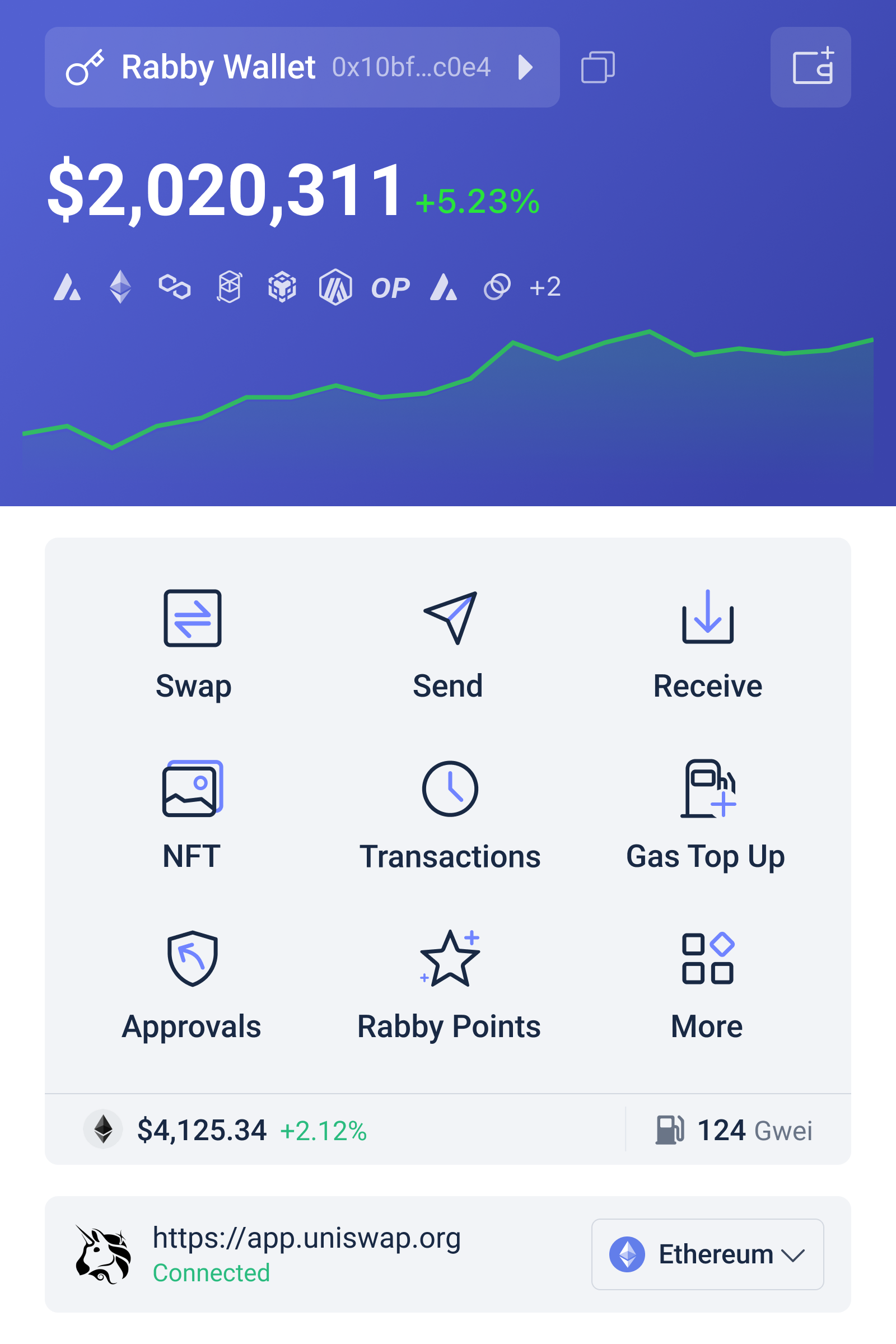
Wallet features can support this process by presenting risk signals, decoding contract calls, comparing expected balance changes, and flagging suspicious approvals or unsupported assets. A user-oriented rabby wallet workflow is most valuable when these features encourage verification rather than replace it. The goal is not to make every transaction look safe; it is to make uncertainty visible at the moment when the user still has a choice.
Users should also distinguish warnings from verdicts. A warning may identify an unusual contract, a large approval, or a simulation mismatch. It does not necessarily prove fraud. Conversely, the absence of a warning does not prove that an application is safe, because detection systems can lack context or fail to recognize a new attack pattern. The sensible response is proportional caution: slow down for high-value transfers, unfamiliar contracts, bridges, leverage, and permissions that persist beyond the current action.
What to Watch as Wallet Security Evolves
If simulation becomes more reliable and more widely integrated, the likely improvement will not be that users stop making mistakes. A more plausible scenario is that wallets will shift from signing interfaces toward transaction review systems. The key signal to watch is whether tools can explain not only what changes, but why the change occurs, which permissions remain, and which assumptions the preview depends on.
That development would still face a fundamental limit: no wallet can infer a user’s complete economic objective or guarantee the future behavior of an external protocol. Better previews may reduce accidental approvals and chain confusion, while leaving governance risk, oracle design, liquidity conditions, and contract upgrade risk unresolved. In other words, security tooling can narrow the space of preventable errors, but it cannot convert open financial systems into deterministic ones.
Frequently Asked Questions
Does transaction simulation guarantee that a smart contract is safe?
No. Simulation estimates the likely execution result under a particular blockchain state. It can expose unexpected transfers, approvals, failures, or balance changes, but it does not prove that the contract is audited, honest, economically sound, or safe from future changes. Treat it as a pre-signing diagnostic, not a security guarantee.
Why is a multi-chain wallet useful if each network has different risks?
A multi-chain wallet can reduce operational friction and give users one place to review accounts, networks, and transaction requests. Its value depends on clear network separation and meaningful transaction context. Users should still verify the active chain, contract address, asset representation, fees, and permissions for every important action.
What is the most important check before signing?
Compare your intended action with the complete set of simulated effects. Confirm what leaves the wallet, what arrives, which permissions are created, and whether the result occurs on the intended network. If the preview is unavailable, incomplete, or inconsistent with your goal, postponing the transaction is often the most rational risk-management decision.
Smart contract security is therefore less about finding a single perfect feature and more about improving the quality of decisions at the signing boundary. A multi-chain wallet provides access; simulation provides a model of consequences; careful verification supplies judgment. Used together, they create a stronger process—one that recognizes that the most important question is not whether a transaction can execute, but whether its full effects match the user’s informed intent.